
Escambia County Court Records After a Jail Arrest
After an arrest and booking in Escambia County, the case moves into the criminal court process. The arresting agency hands over the arrest paperwork and the booking charges. The Office of the State Attorney for Florida's First Judicial Circuit then decides what to file, and the Clerk of the Circuit Court and Comptroller keeps the court record once a case is opened. The charges a prosecutor files become the court record, and they may match, add to, reduce, or drop the charges listed at booking.
The booking side and the court side answer different questions. For custody, bond, and the booking sheet, the jail roster is the source, covered on the jail inmate records page, and booking photos are explained on the jail roster mugshots page. The court record itself, meaning the charges the prosecutor filed and how the case moved, lives in the Clerk's case index. Court records after an arrest are where the charge becomes formal, not where the arrest first appears.
The Path From an Arrest to a Court Record
Court records after an arrest follow a predictable order, and knowing the steps helps you find the right document at the right stage. The arrest and booking come first, then the prosecutor's review, then the filing that opens the court file. Each step is handled by a different office.
- Law enforcement makes the arrest.
- The person is booked into Escambia County Corrections.
- An initial appearance addresses rights and bond.
- The First Judicial Circuit State Attorney reviews the case.
- A charging document is filed, such as an information, indictment, or complaint.
- The Clerk's case record appears in the court portal after filing and indexing.
- Court events follow: arraignment, motions, plea, trial, or dismissal, then disposition.
A useful working order for a reader is to collect the booking facts from the jail roster first, write down the booking number and date, then search the Clerk portal by name and compare the filed charges. The jail roster answers whether someone is in custody; the Clerk docket answers what the prosecutor filed.
How to Find Escambia County Court Records After an Arrest
Filed charges and case status show up in the Clerk's public court-record portal, not on the jail roster. The Escambia Clerk runs a Benchmark Web search and an online public-records page, and a separate Public Records Center handles documents that are not downloadable online.
- Open the Escambia Clerk Benchmark Web portal.
- Search by the defendant's name, or by case number if jail or bond paperwork gives you one.
- Open the case and read the charge list, filing dates, and court dates.
- Check each charge's status, and compare the filed charges with the booking charges.
For a broader statewide criminal history rather than a single county docket, the Florida Department of Law Enforcement runs a separate criminal-history check, and older or sealed items may need a request through the Clerk Public Records Center. Court records can also lag behind a booking, since indexing takes time after a case is filed.
How Charges Get Filed After an Arrest
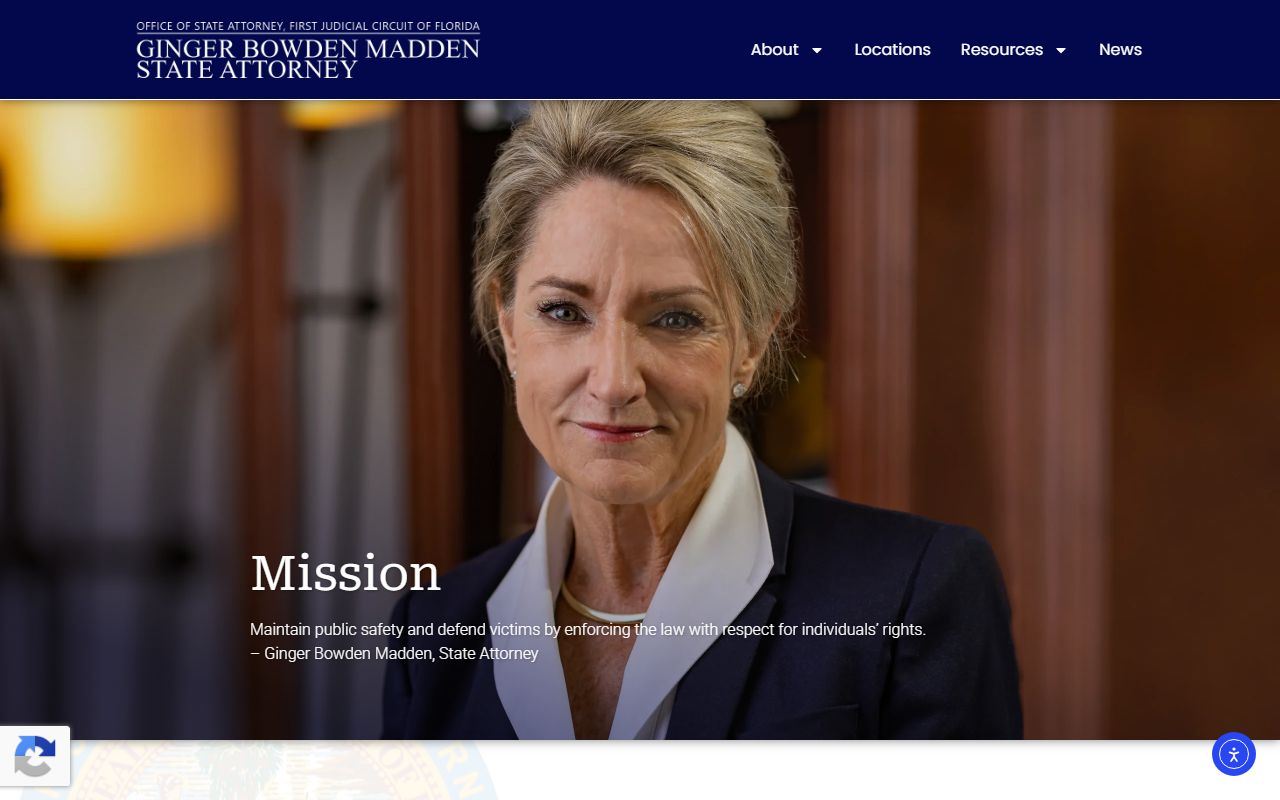
The charge record begins when the prosecutor files a charging document, which is a separate step from the jail booking. In Florida the document depends on the offense and the procedure used. The State Attorney decides whether to file by information, while a grand jury returns an indictment for the most serious felonies, and a complaint or citation can start lower-level matters. The screenshot below shows the First Judicial Circuit State Attorney site, the office that makes the filing decision for Escambia County.
| Complaint | Information | Indictment | |
|---|---|---|---|
| Filed By | Officer / Prosecutor | State Attorney | Grand Jury |
| Common For | Lower-level offenses | Many felonies | Most serious felonies |
| Starts | The case | The case | The case |
Charge Status in Court Records After an Arrest
Charges are not fixed once a case opens. As it moves, a charge can be amended, reduced, added, or dropped, and the prosecutor may decline to proceed. This is why the booking charges on the jail roster often differ from the charges that finally appear in the court record. The common status terms read like this.
| Status | What It Means |
|---|---|
| Pending | The case or count is still active. |
| Amended / Reduced | The charge was changed or lowered after filing. |
| Dismissed | The court or prosecutor ended the count. |
| Nolle Prosequi | The prosecutor chose not to proceed on the charge. |
Florida also allows a court to withhold adjudication on some charges, which is a separate outcome from a straight conviction.
Bond and Release After an Arrest
Bond is usually addressed early, at first appearance or through a judge's order, and Escambia County publishes a dedicated bond page. Paying a bond does not always mean immediate release, because a hold, a warrant, a detainer, or another agency's custody can keep a person in jail even after a local bond is handled. The screenshot below shows the county bond page with the bond-office and release detail.
| Bond Type | How It Works |
|---|---|
| Cash Bond | The full amount is posted in cash or certified funds through the jail or court process. |
| Surety Bond | A licensed Florida bail bond agent posts the bond for a fee. |
| Own Recognizance | The court releases on conditions without a full cash amount. |
| No-Bond Hold | The charge or hold does not allow release at that time. |
Warrants That Lead to an Arrest
A warrant can start the whole pathway. An arrest warrant, a bench warrant for a missed court date, or a violation warrant from supervision can each end in a booking, after which the case shows on SmartWEB. No standalone official Escambia County active-warrant search was confirmed in this research, so the Clerk's case docket is the place to look for failure-to-appear or bench-warrant entries tied to a known case. For sheriff-held warrant questions, use the Sheriff's Office official channels, and after a booking, call the jail. A warrant can also produce a no-bond or hold status that local bond will not clear. For a broader statewide picture, the Florida Department of Law Enforcement offers a criminal-history record check that is separate from any single county docket and is subject to its own fees and identity requirements. A person who may have an open warrant should verify with the issuing court or an attorney rather than appearing at the courthouse or jail without counsel.
Charges vs. Convictions
Being arrested and charged is not the same as being convicted. A charge is an accusation; a conviction is the outcome after a plea or a verdict. Court records after an arrest will show both stages, so reading them carefully matters.
| Charge | Conviction | |
|---|---|---|
| Stage | Accusation | Verdict or plea |
| Burden of Proof | Probable cause | Beyond a reasonable doubt |
| Public Record | Yes | Yes |
Sealed vs. Expunged Records
After a dismissal or an eligible outcome, a person may be able to seal or expunge the record. Florida's court-ordered expunction process runs through the courts and the Florida Department of Law Enforcement, and it is a legal process, not something that happens automatically because a case ended well. The differences matter.
| Sealed | Expunged | |
|---|---|---|
| Visibility | Hidden from public view | Destroyed or treated as if it never existed |
| Law Enforcement | Limited access | Very limited access |
| Process | Court petition under Florida law | Court and FDLE process under Florida law |
Sealing and expunging an arrest record is also covered on the jail roster mugshots page where it touches booking-photo removal.
Background Check Considerations
A casual name lookup in a court portal is not the same as a regulated background check. Employment, tenant, and credit screening are governed by the Fair Credit Reporting Act and must run through a proper consumer reporting agency, not a public docket search.
Important: This site is not a consumer reporting agency and its content may not be used for hiring, housing, credit, insurance, or any other FCRA-covered decision.
Restricted Court Records After an Arrest in Escambia County
Not every court record after an arrest is open. Florida's public-records exemptions can withhold juvenile matters, sealed charges, active investigative details, and protected victim or witness information, even when the broader case is public. A dismissed charge is not the same as a sealed or expunged one, and it can still appear until the proper clearing process is finished. When a portal lists a case but hides the document, the Clerk Public Records Center is the route for the file.